With the rapid iteration of the global smart warehousing industry, four-way shuttle, as core equipment in the field of dense storage, have become the first choice for intelligent upgrades for domestic and foreign enterprises due to their advantages of high efficiency and high space utilization. In recent years, Chinese four-way shuttle companies have accelerated their overseas expansion, and overseas market demand has continued to rise. However, export business is not simply about exporting products, but a comprehensive test of a company’s overall strength. So, what are the core conditions required for a four-way shuttle project to successfully carry out export business?
1. Core technologies are independently controllable
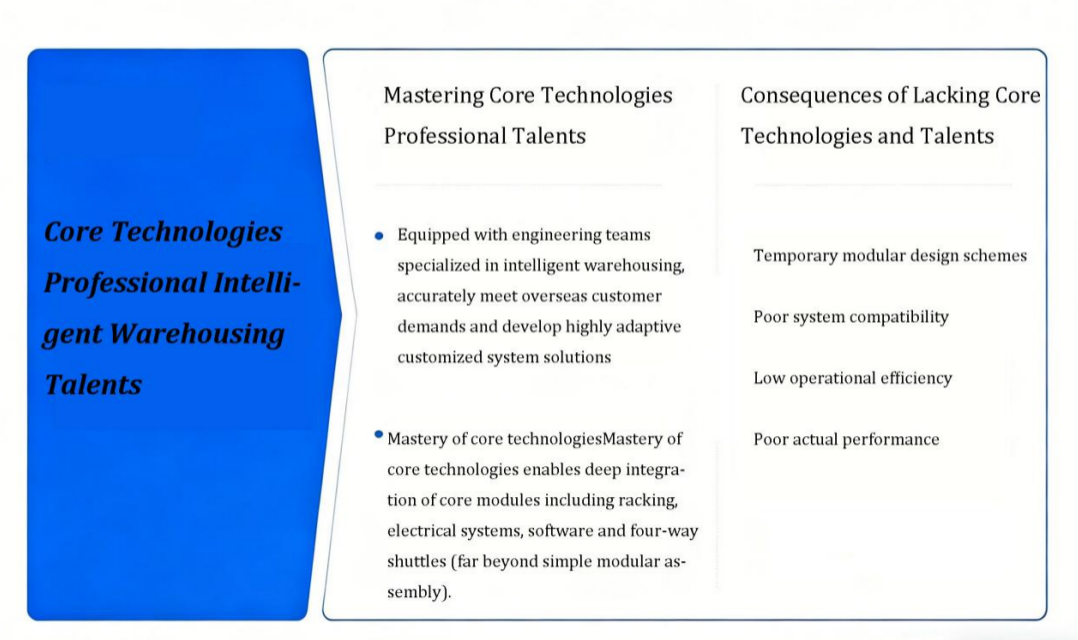
The key to exporting four-way shuttle intelligent warehousing systems lies in the fact that exporting companies must master core technologies and have a pool of professional intelligent warehousing talent. Only by equipping themselves with an engineering team deeply rooted in the field of intelligent warehousing can companies accurately match the needs of overseas customers and customize highly adaptable system solutions. Mastering core technologies is essential to achieving deep integration of core modules such as racking, electrical systems, software, and four-way shuttle, rather than simply piecing them together. If companies lack core technologies and professional talent, and rely solely on temporarily combining modules to design solutions and integrate projects, it is highly likely to result in poor system compatibility, low operational efficiency, and ultimately, the actual warehouse performance falling far short of expectation。
Key to Export of Four-Way Shuttle Intelligent Warehouse System:
Independent and Controllable Core Technologies
2. More than five years of project implementation experience
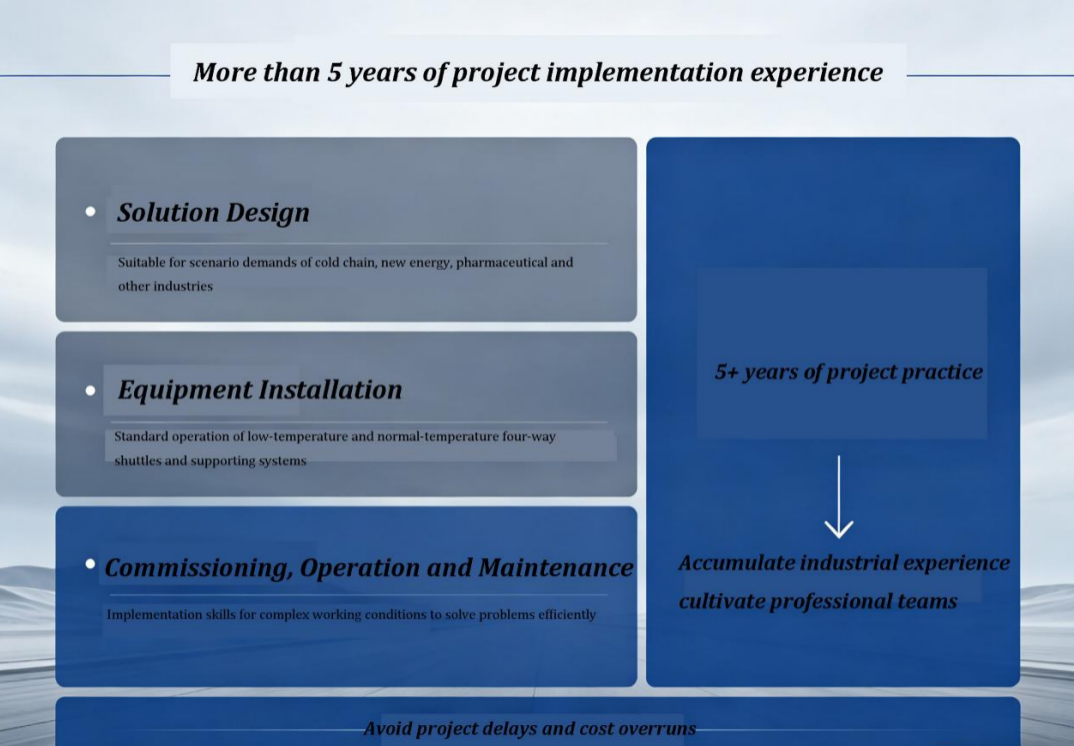
Four-way shuttle projects are complex systems engineering projects, involving multiple stages such as solution design, equipment installation, commissioning, and maintenance. The implementation of overseas projects is even more challenging. Therefore, companies must have more than 5 years of project implementation experience, which is a crucial foundation for ensuring the smooth progress of overseas projects. Long-term project practice allows companies to accumulate rich industry experience, become familiar with the application scenarios of different industries (such as cold chain, new energy, and pharmaceuticals), and master project implementation techniques under various complex operating conditions. For example, for the low-temperature environment of cold chain scenarios, it is necessary to customize four-way shuttle equipment and supporting systems adapted to storage requirements of -25~-18℃. At the same time, years of project experience also help companies cultivate a professional project implementation team, improve the rationality of solution design and the standardization of equipment installation, provide personnel and technical support for the efficient advancement of overseas projects, and avoid problems such as project delays and cost overruns due to insufficient experience.
3. Ensure the project is successfully implemented and accepted.
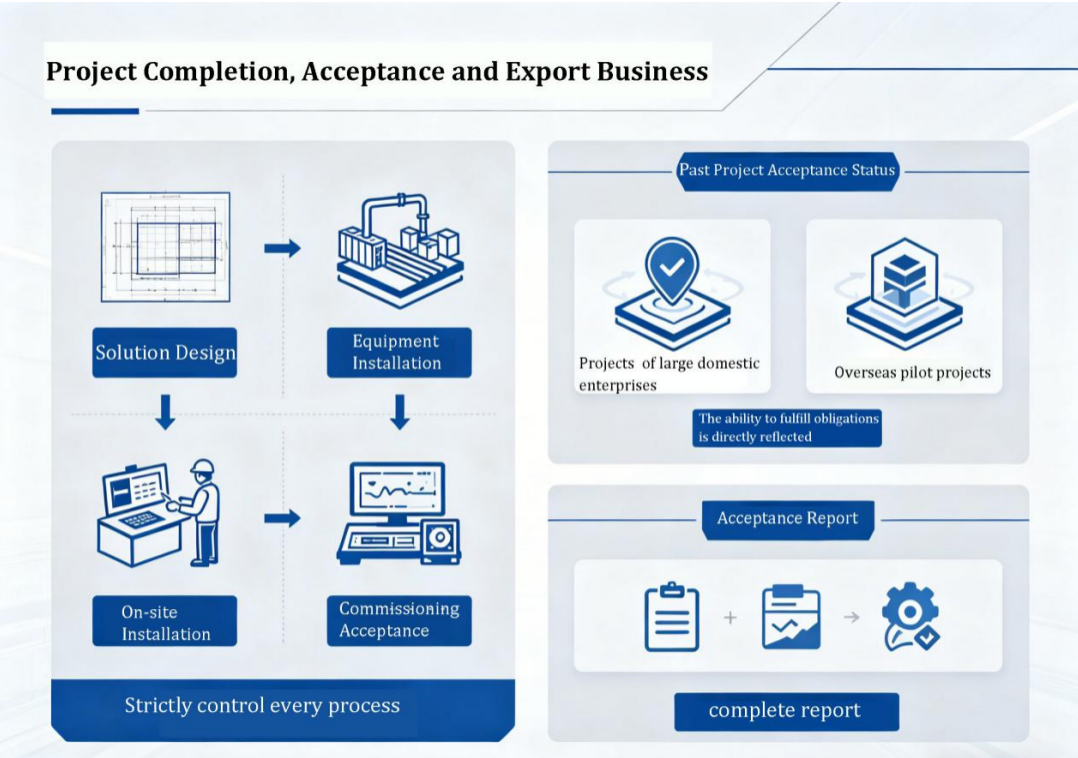
The success rate of project implementation and acceptance is a crucial factor for overseas clients when selecting partners and is key to the sustainable development of a company’s export business. Companies must possess a robust project management system, rigorously controlling every stage from scheme design, equipment production, on-site installation to commissioning and delivery to ensure all projects are successfully implemented and pass acceptance. Past project acceptance records directly reflect a company’s contract fulfillment capabilities. Companies need to accumulate a wealth of successful case studies, including complete acceptance reports for both large domestic enterprise projects and overseas pilot projects, demonstrating their ability to efficiently deliver projects and meet clients’ core needs.
4. Meets the exporting country’s qualification requirements, ensuring compliant overseas operations.
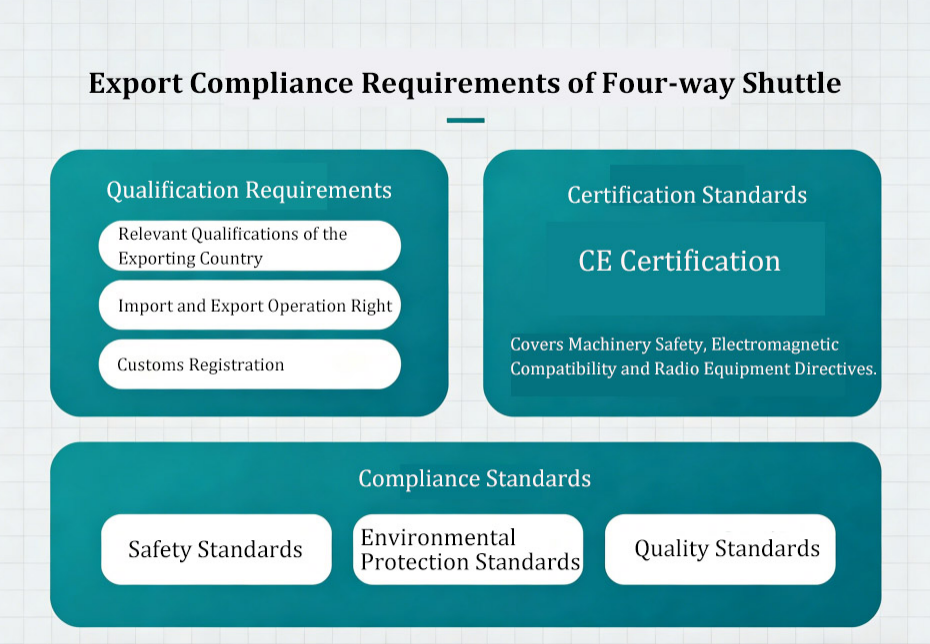
Compliance is a prerequisite for exporting four-way shuttle. Companies must meet all the relevant qualification requirements of the exporting countries to successfully enter overseas markets. Different countries and regions have clear qualification certification standards for the import of industrial equipment. For example, exporting to the EU requires CE certification, covering multiple directives such as mechanical safety, electromagnetic compatibility, and radio equipment. Furthermore, companies must possess import and export rights, complete customs registration, and ensure that their products meet the relevant safety, environmental, and quality standards of the exporting country.
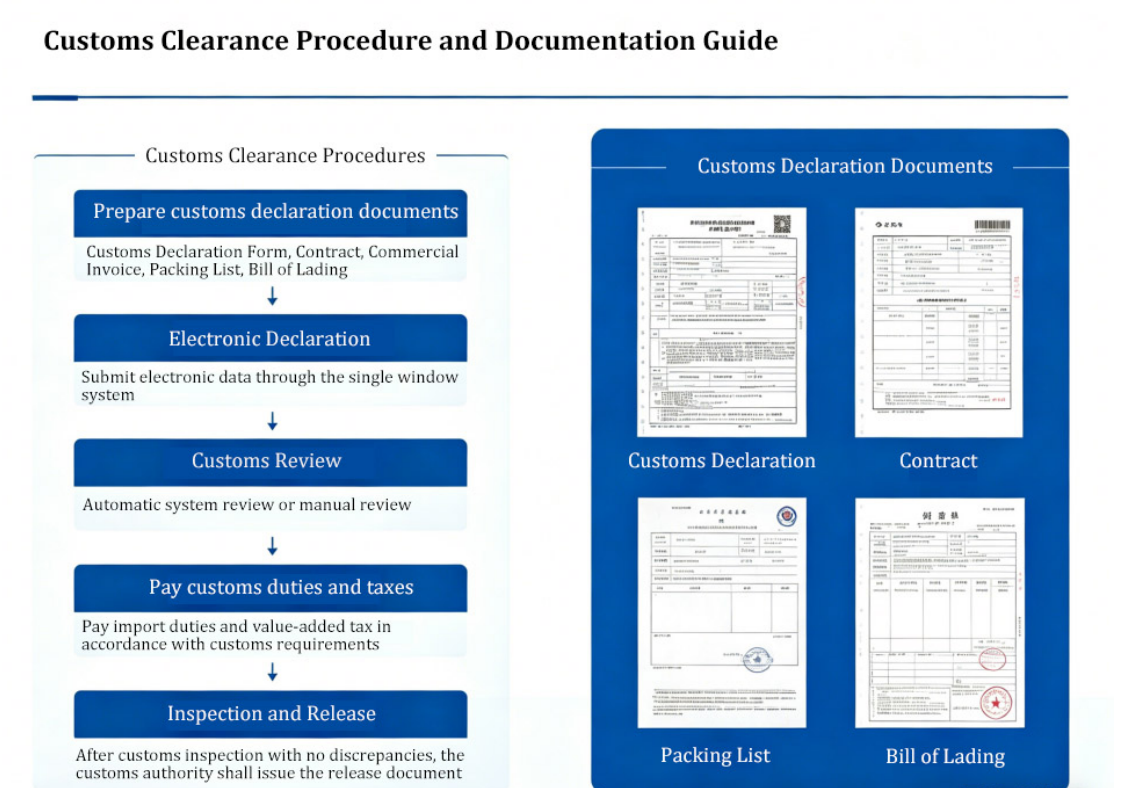
5. Familiar with customs clearance procedures and declaration documents
The smoothness of the customs clearance process directly affects the delivery cycle of four-way shuttle export projects. Companies must be familiar with all relevant customs clearance procedures, master the operational norms for each stage including customs declaration, inspection, and international transportation, and prepare all necessary customs declaration documents to ensure smooth customs clearance.
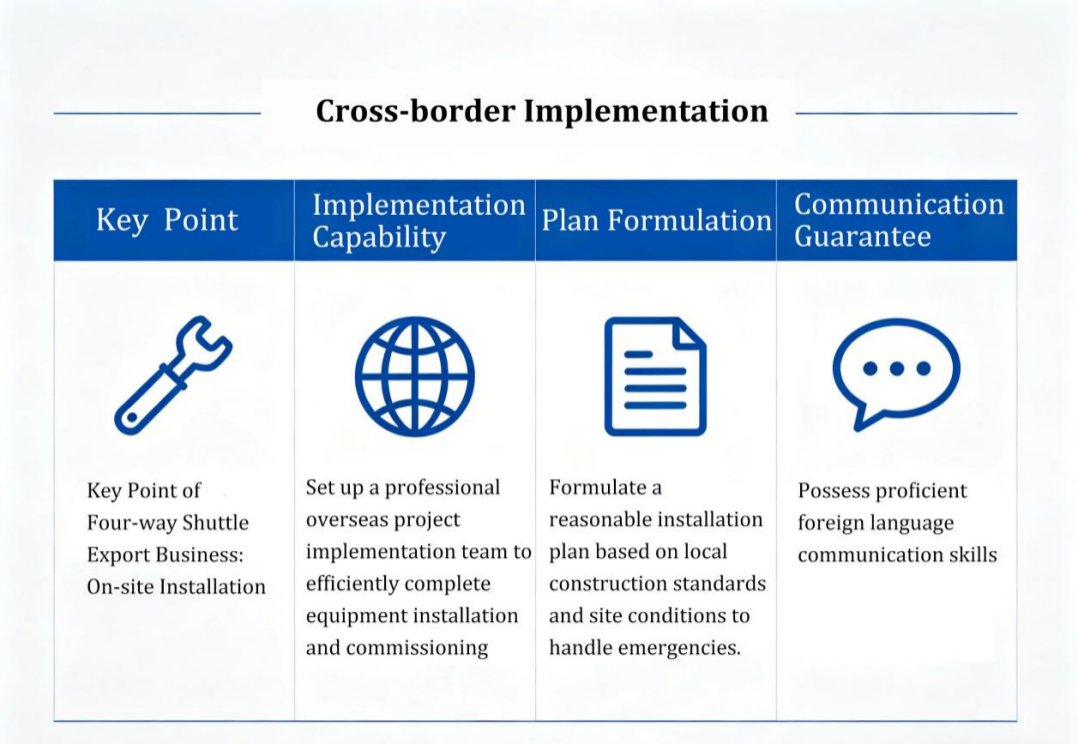
6. Capable of cross-border implementation
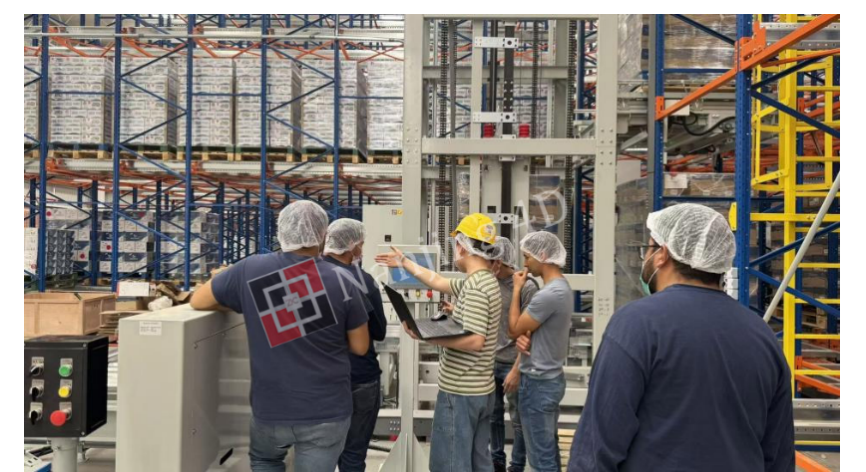
The transnational implementation of four-way shuttle projects, especially the on-site installation phase, is a key and challenging aspect of export business. Companies must possess strong transnational implementation capabilities, assembling professional overseas project implementation teams capable of efficiently completing on-site installation and commissioning work, overcoming geographical, linguistic, and cultural differences. During overseas installation, it is necessary to develop reasonable installation plans based on local construction standards and site conditions, and to handle various unforeseen circumstances. Simultaneously, the team must possess fluent foreign language communication skills to smoothly communicate with local clients and construction teams, ensuring that installation work proceeds according to plan and that the project is delivered on time.
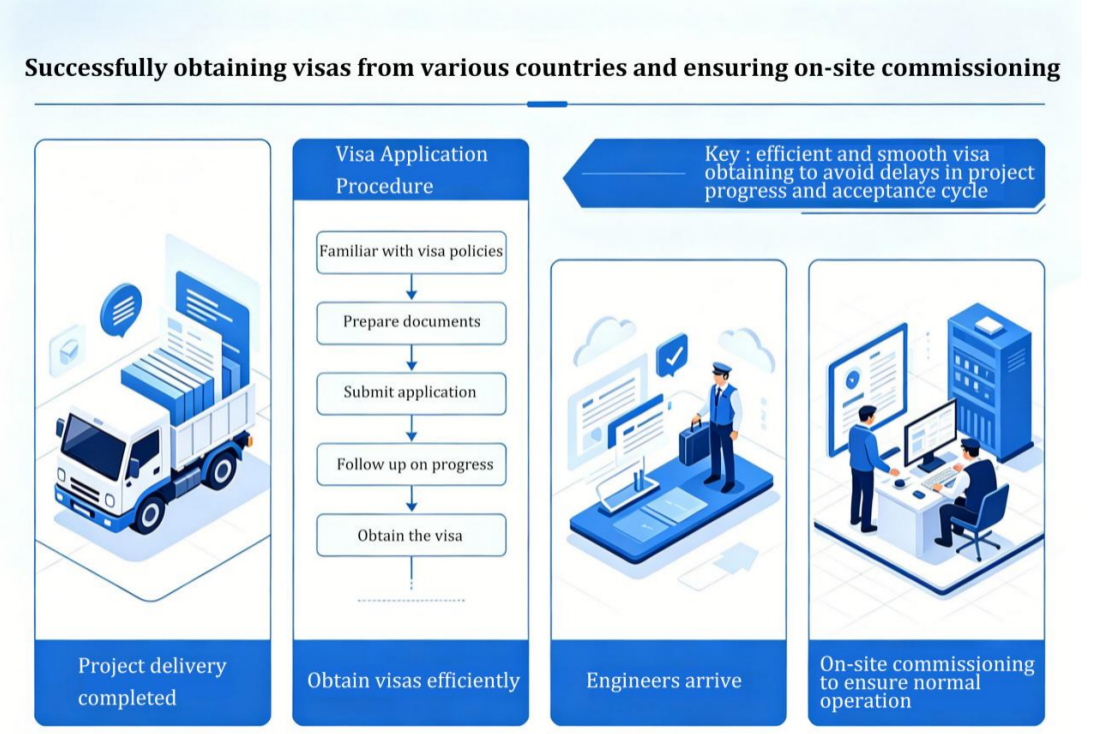
7. Successfully obtained visas from various countries, ensuring smooth on-site commissioning.
After the four-way shuttle project is delivered, on-site commissioning by engineers is crucial to ensuring the normal operation of the equipment. Successful visa processing for various countries is essential for engineers to arrive at overseas sites smoothly. Companies need to be familiar with the visa policies and procedures of different countries and apply for the necessary visas for on-site commissioning engineers in advance. This ensures efficient and smooth visa processing and avoids visa issues preventing engineers from arriving on time, which could impact project commissioning progress and acceptance cycles.
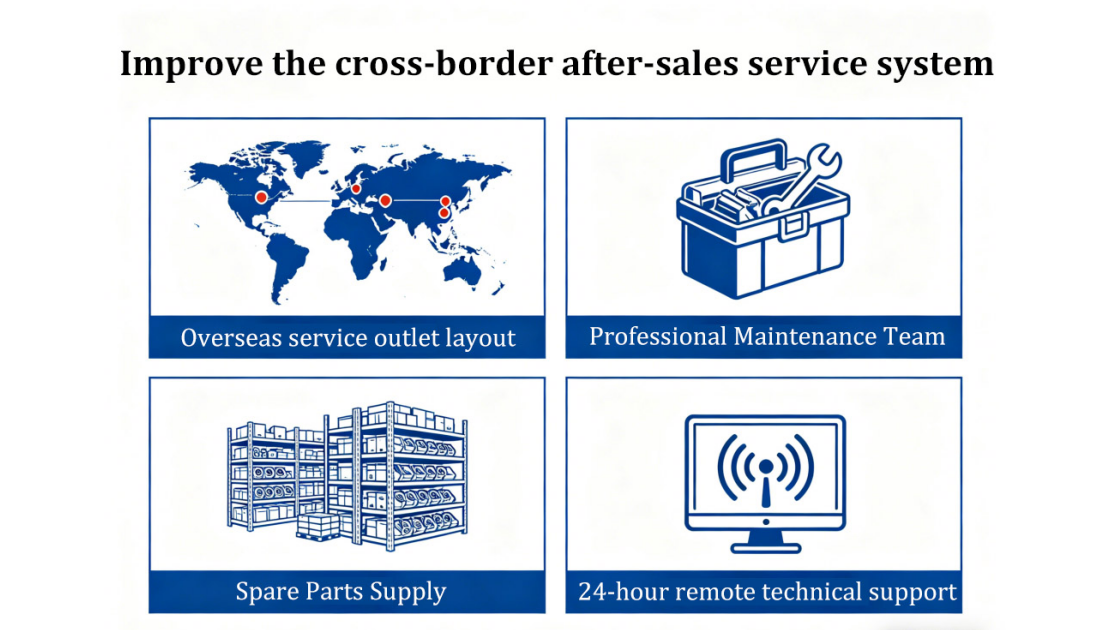
8. Improve the cross-border after-sales service system
Competition in overseas markets hinges not only on product quality and technological strength but also on comprehensive after-sales service. A robust after-sales service system must encompass multiple aspects, including overseas service network coverage, professional repair teams, spare parts supply, and remote technical support. For instance, establishing service outlets in key export regions, staffed with professional repair engineers and maintaining ample spare parts reserves, enables rapid response to customer after-sales needs and timely resolution of equipment operation issues. Simultaneously, providing 24-hour remote technical support offers technical consultation, troubleshooting, and other services, reducing customer operating costs, enhancing customer satisfaction, building a positive brand image, and laying the foundation for future business expansion.
In summary, exporting four-way shuttle projects is a comprehensive test of a company’s technological strength, project experience, compliance capabilities, and service level. Only companies possessing independent core technologies, rich project experience, complete compliance qualifications, efficient cross-border implementation capabilities, and high-quality after-sales service can gain a foothold in the global smart warehousing market and achieve sustainable and healthy development of their export business. In the future, with the continuous improvement of global intelligence levels, the four-way shuttle export market has enormous potential, and companies with core competitiveness will usher in more development opportunities, propelling Chinese smart warehousing onto the world stage.
Post time: Apr-22-2026